
Brazil: a source of inspiration for tax administrations worldwide

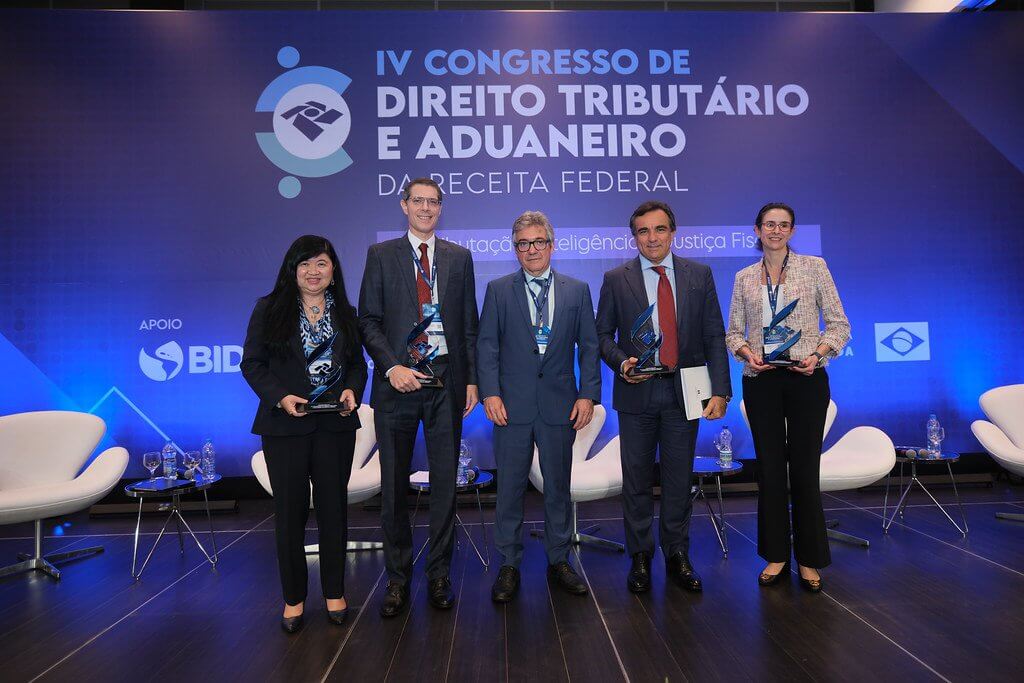
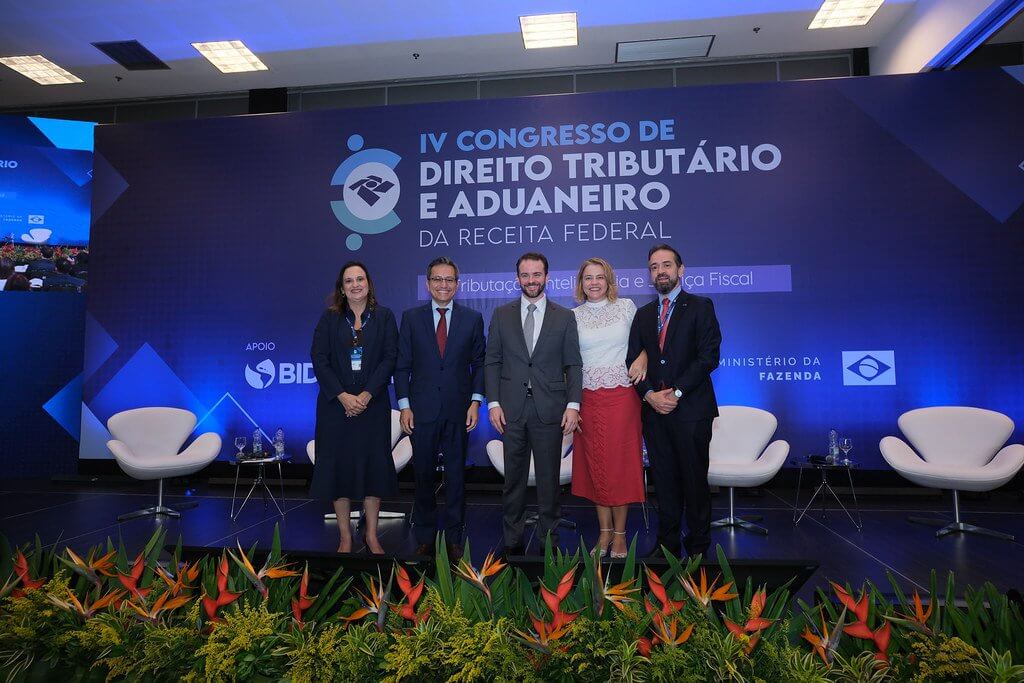
From October 14 to 16, 2026, I had the honor of participating in the IV Congress of Tax and Customs Law, organized by the Special Secretariat of the Federal Revenue of Brazil (RFB), and of intervening in a panel on the implementation of the Multilateral Instrument under BEPS Action 15 alongside distinguished Brazilian professionals.
Beyond the debates on taxation, intelligence, and fiscal justice, the conference, which had over 400 in-person participants and up to over 9,000 remote participants, from different media outlets and different fields of action, allowed me to appreciate an institutional transformation that deserves international attention.
In recent years, significant and innovative advances have been made in good governance and technology; and an unprecedented cultural transformation, which has impacted continuous improvement, innovation, evidence-based management, trust-building, and transparency. This was evidenced by the comments from representatives of the private sector and government partners, who—in a sincere tone and citing specific examples—repeatedly expressed their gratitude toward the RFB and acknowledged the positive impact of its work.
Those who are not very familiar with Brazil’s experience would ask, “What did or is the RFB doing to achieve this level of development I am referring to?” The answer is clear: hard work, perseverance, change management, creation of spaces for research and development, a high level of integration with other tax administrations and international organizations, application of innovative diagnostics and maturity models, training, investment, intensive use of technology, and a long-term vision, among many other aspects.
It should be noted that, due to its unique characteristics, the Brazilian experience does not in all cases serve as a model that can be mechanically replicated in other countries. Nevertheless, it offers useful principles, ideas, techniques, and lessons for tax administrations seeking to modernize. Below, we highlight some of these, organizing them into six complementary areas.
1. Integrated digitalization: from procedures to data
The Public System of Digital Writing (SPED in Portuguese) shows that digitalizing is not equivalent to creating an isolated application. Its components—including ECD, EFD, NF-e, and ECF—standardize accounting and fiscal registries and electronic documents, favoring traceability and information exchange.
For its part, eSocial integrates employment, social security, and tax data, while DCTFWeb uses information from eSocial and EFD-Reinf to file certain tax returns. The effective elimination of duplication, however, is a gradual process and depends on each specific tax obligation and taxpayer..
In customer service, e-CAC and the RFB Services Portal expand the possibility of conducting procedures remotely; e-Processo facilitates the digital management of files; the Pre-filled Return uses already available data to reduce the typing burden and facilitate review; and Receita Saúde electronically registers health service receipts. The evolution of the CPF and its articulation with gov.br strengthens access to digital identification services.
The integration also extends to records; SINTER gathers territorial information and the Brazilian Real Estate Registry (CIB) seeks to facilitate national property identification.
The alphanumeric CNPJ expands the identification capacity of legal entities and the CNPJ — Tax Administration Module aims to modernize registration procedures. For other administrations, the lesson is to prioritize interoperability, data quality, and user experience over multiplying platforms.
2. Simplification and proportionate compliance
Simples Nacional and the Individual Microentrepreneur (MEI) regime illustrate how to adapt obligations to the scale of economic activity. The simplification of payments and procedures motivates formalization, provided it is accompanied by clear rules and an evaluation of its effects.
The Sintonia program classifies legal entities according to compliance criteria, such as registration regularity, information submission, and payment of obligations. According to official information released by the RFB in July 2026, its classification reached approximately 10.9 million active legal entities. Complementary Law 225/2026 provides a relevant regulatory framework for this orientation towards compliance. This regulation, enacted in early 2026, formally established the Taxpayer Defense Code, providing solid legal backing for programs such as CONFIA, Sintonia, and Authorized Economic Operator (OEA as abbreviated in Portuguese).
In foreign trade, Remessa Conforme promotes the advance submission of information by eligible platforms for the processing of low-value international shipments.
For its part, the OEA program distinguishes operators that meet security or compliance requirements and provides facilities according to the corresponding modality. Both reflect a general principle: to focus administrative action on where the risk is greatest and to provide predictability to those who comply.
3. Cooperation and dispute prevention
CONFIA (Cooperative Tax Compliance), began to take shape in 2021 and evolved into a permanent program. Promotes a relationship of transparency and proactive risk management with large taxpayers.
Receita Consenso has a distinct function, by enabling dialogue mechanisms to address specific tax or customs disputes under the stipulated conditions. As an example of application, the RFB reported in July 2026 an agreement with Petrobras aimed at resolving an issue before audit.
Receita Soluciona, in turn, channels proposals from representative entities regarding recurring interpretation or regulatory application difficulties, without replacing formal consultations. Tax self-regulation allows for the correction of certain inconsistencies or debts under defined conditions before a full audit. Taken together, these instruments suggest that legal certainty and prevention can complement—not substitute—control powers.
4. Tax intelligence and risk-based control
The Malha Fiscal (Tax Mesh) and electronic data exchanges compare declarations with third-party information to identify discrepancies and guide reviews or regularization processes. Its potential depends as much on the availability and quality of information, the design of selection criteria, and guarantees for taxpayers. Brazil is also exploring artificial intelligence applications and technologies like blockchain; it is important to distinguish concrete and verified experiences from still experimental developments, avoiding presenting them interchangeably as consolidated results.
Collaboration with law enforcement agencies, prosecutors’ offices, and financial oversight bodies expands the capacity to address complex risks. For other jurisdictions, the lessons to be learned lie in data governance, specialized expertise, coordination, and the evaluation of results—not merely in the acquisition of tools.
5. Consumption reform: innovation in gradual implementation
The Consumption Tax Reform (RTC) progressively redefines taxation through the Contribution on Goods and Services (CBS), the Tax on Goods and Services (IBS), and the Selective Tax (IS). Its regulatory framework includes, among other provisions, complementary laws (CL) 214/2025 and 227/2026. It is essential to differentiate the approved legal framework, the operational tests—including the CBS pilot—and the planned transition for the following years. In 2026, testing and adaptation stages of fiscal systems and documents will be developed; it is not appropriate to describe the entire new regime as fully implemented. While LC 214/2025 established the foundations of the dual VAT (CBS, IBS, and Selective Tax), LC 227/2026 focuses fundamentally on the creation of the IBS Management Committee (CGIBS) and on regulating the administrative litigation of this new tax.
The international interest in this process lies both in its architecture and in the necessary coordination between institutions, systems, contributors, and transition schedules.
6. Transparency, citizenship, and institutional culture
Fiscal Citizenship contributes to explaining the meaning of taxes and the rights and duties of taxpayers.
Panel Receita and other transparency tools facilitate the consultation of aggregated information on institutional activity.
In addition, there are spaces for technical exchange with external stakeholders, such as the Applied Tax Studies Group (GETAP), an entity that brings together companies and promotes dialogue on the improvement of tax legislation.
The transformation that is most difficult to replicate is the one that turns continuous improvement, staff training, openness to dialogue, and evidence-based management into established practices.
From the Brazilian experience to international cooperation
Brazil’s experience offers a model for a tax administration that combines smart enforcement, simplification, cooperation, dispute prevention, and transparency. For taxpayers, this combination can lead to greater predictability, legal certainty, and lower compliance costs; for the government, it can result in better resource allocation and a more constructive relationship with society, which ensures the sustainability of tax revenue.
It can be a challenge to replicate Brazilian innovations, as some respond to specific needs or require a robust structure and substantial resources. However, its main value for other tax administrations lies in the opportunity to learn, among other aspects, what problems were solved, what legal capacities and conditions were necessary, how they were implemented, and what evidence exists of their results and impacts.
Cooperation actions that we have had the opportunity to coordinate from CIAT, between the RFB and other tax administrations, turned the aforementioned questions into practical learning experiences. The RFB has become a regional benchmark for tax innovation and a driver of international-scale solutions.
Brazil’s tax system, due to its peculiarities, is for Brazilians; but its developments and achievements are a source of inspiration for tax administrations worldwide.
36 total views, 36 views today