
What I learned after a lifetime in tax administration
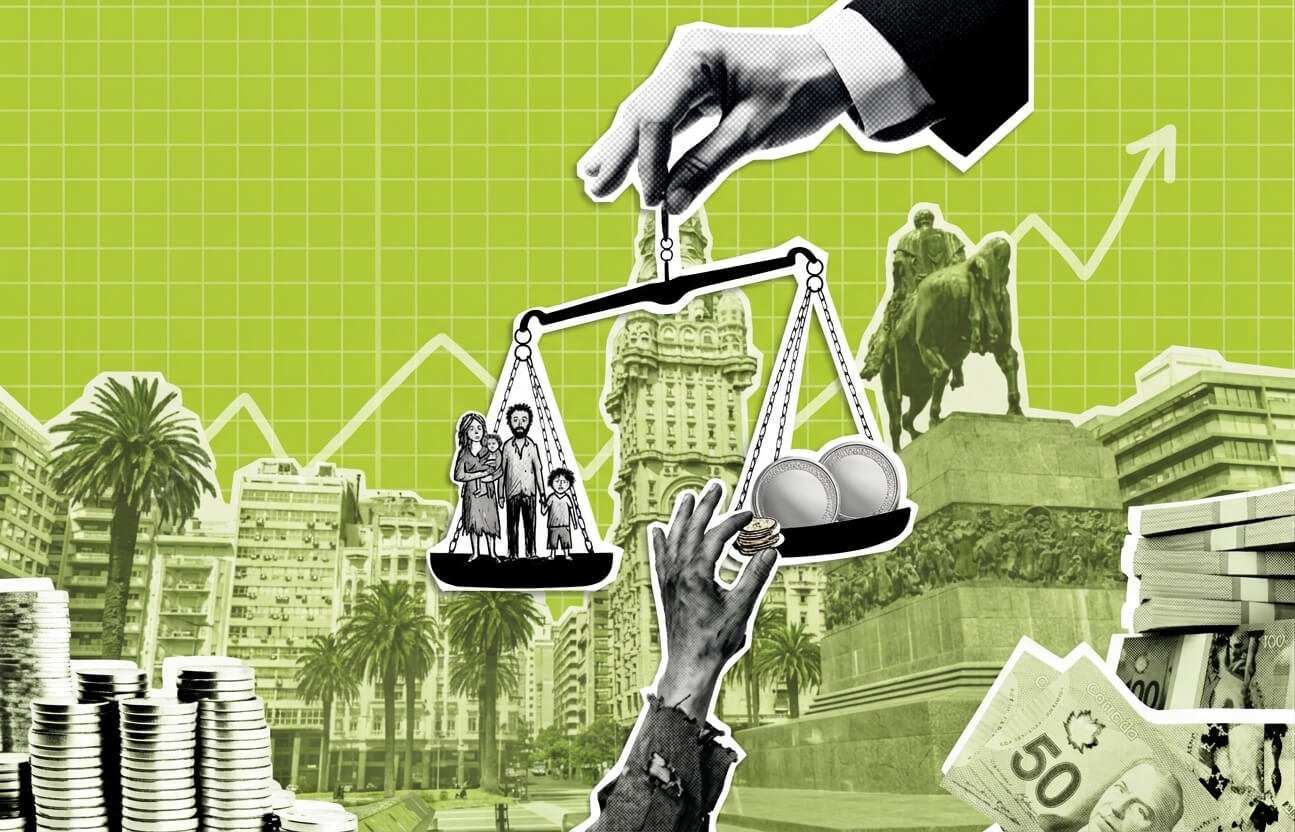
After a lifetime devoted to tax administration, I often find myself wondering what I really learned from it.
During years, I would have answered without hesitation: taxes, procedures, auditing, technology, institutional organization, and international cooperation. Today I realized that all those things were important, but they were not the true focus of my learning.
It took me decades to realize that behind every audit, oversight operation, administrative reform, or technological innovation lay a question I had not yet learned to ask: Why does a society agree to contribute to sustaining the state that makes its coexistence possible?
The beginning.
Cuando ingresé a la administración tributaria pensaba, como probablemente muchos de quienes comienzan esa carrera, que nuestra misión consistía esencialmente en administrar los impuestos: mejorar la recaudación, fortalecer los controles, combatir la evasión y aplicar correctamente la ley.
I experienced firsthand various intense manifestations of the state’s coercive power. I participated in the oversight of commercial and agricultural activities, inventory checks, anti-smuggling operations, seizures, and closures that, under certain circumstances, required police or military support and at times involved personal risk. V those experiences later served as a model for similar initiatives in other countries.
For a long time, I considered the answer as: better systems, more information, more efficient oversight, and strong enforcement capabilities would necessarily lead to greater compliance.
Information becomes a laboratory.
For eight years, I worked directly on the development of the tax administration’s data processing systems. That experience required me to examine the various approaches the institution used to design and manage its functions to transform them into information and processes.
Without realizing it at the time, technology also became a means of monitoring the administration itself: digitalizing a function first required understanding what the institution did, how it did it, and what information it considered necessary to achieve its objectives.
Years later, I would come to understand something that I now consider essential: having more information does not necessarily mean asking better questions.
Looking into governance as well
There was another experience whose significance I also failed to grasp at the time. For two years, I was directly involved in ensuring that the actions of public institutions complied with the law. My focus shifted from centering solely on the taxpayer to also encompassing the State itself.
I wasn’t yet thinking in terms of a social contract, but that experience began to reveal to me the other side of a relationship that would later prove to be central: if society has obligations to the state, the state must also be accountable for the way it exercises its mandate and manages the resources entrusted to it by society.
My professional life had provided me with the pieces long before I realized they were part of the same problem.
When Experience Changes the Questions
Meanwhile, reality was questioning many of these convictions. Controls were improving, technology was advancing, and enforcement capabilities were increasing, but tax evasion persisted, the informal economy continued, and mistrust of institutions did not disappear.
It was no longer enough to ask myself how I could exercise better control. I began to ask myself why people comply.
I realized that coercion could detect violations, recover resources, punish misconduct, and protect the legal order. It was necessary. But controlling behavior did not necessarily mean understanding its causes.
The Classroom as a Laboratory
For eleven and a half years, I taught a graduate-level course on Comparative Tax Administration. That classroom eventually became another laboratory for reflection.
Through my conversations with accounting professionals, I observed a strong emphasis on technical expertise and accountability to the financial interests of those who received their services, while I found less recognition of an aspect that began to concern me: the social responsibility stemming from the public trust placed in the profession.
My ideas sometimes drew harsh criticism. Far from rejecting them, I ended up incorporating them into my learning process. They forced me to reexamine my knowledge, revisit problems I thought I understood, and ask myself why professional training could prioritize technique without attaching equal importance to the public trust that socially justified its practice.
The teacher ended up learning from his own classroom.
I came to understand that public trust is not a professional privilege; rather, it is trust delegated by the State—as a legal expression of society—to lend credibility to essential facts of the economic reality. Whoever receives it assumes a responsibility that transcends the private interests of those who engage in their services?
The classroom led me from technique to trust in this way.
From Trust to Legitimacy
But another question remains: Why do specific societies trust these institutions while other societies distrust them?
That question led me to the concept of legitimacy and, in the end, to the social contract.
No tax administration can indefinitely ensure compliance through controls and penalties alone. When compliance increasingly depends on coercion, we must ask ourselves whether the problem lies exclusively with the taxpayer or whether it also reveals difficulties in the relationship between the state and society.
I understand that the social contract approaches equilibrium when a socially sizable proportion of the population considers that the material and institutional benefits of living together reasonably justify the burdens necessary to sustain it.
Compliance thus takes on a new dimension. It no longer means merely obeying a rule out of fear of punishment; it can also express the recognition that the obligation helps to uphold a common order viewed as legitimate.
A New Question for the Tax Administration
I must acknowledge the extraordinary technical, technological, and human progress achieved by tax administrations, to which international organizations such as CIAT have contributed through cooperation, research, training, and the exchange of experiences.
It is precisely this progress that allows us today to ask an additional question: Should we explain every instance of noncompliance solely by the taxpayer’s behavior, or might certain cases also reveal shortcomings in the State’s own actions?
Tax administration is not responsible for the quality of government spending, public services, or the legitimacy of governments, nor should it become a political actor. But it observes a consequence of that relationship daily: tax compliance.
Perhaps was this function insufficiently developed? The information used to facilitate and monitor compliance could also—through aggregated analysis that is independent and free from partisan bias—help identify factors contributing to noncompliance that go beyond the taxpayer and provide feedback to the government on their probable causes.
It is not the role of the tax administration to judge governments or decide on public policy. Its contribution would be different: to transform part of the information it obtains from noncompliance into insight into the conditions that cause it.
After a lifetime of gathering information to help the government better understand taxpayers, I ended up wondering if that same information could also help the government better understand itself.
What I Finally Learned
After a lifetime dedicated to tax administration, as I said, I realized that the real problem was never only about taxes.
Technology can facilitate compliance. Oversight can detect and correct violations. Coercion can protect the legal order. Public trust can strengthen confidence. But none of these can replace the legitimacy that leads a society to consider reasonable the burdens necessary to sustain its coexistence.
I never stopped believing in coercion as a necessary power of the state. After having exercised it even in intense forms, I learned to recognize its limits.
Coercion protects order; legitimacy helps ensure that society recognizes that social order. Looking back on that journey now, I would like these pages to also serve as a reflection on my professional life—not as a renunciation of what I did or as regret for the responsibilities I took on, but as an opportunity to view them from the perspective that only the passage of time can provide.
I do not want to leave any definitive conclusions. I would rather leave questions and tell what experience progressively taught me.
And, as my goal, to leave the testimony of someone who, after ninety-one years of life, realized that there was still more to learn.
I began by asking myself how to get taxpayers to comply. I ended up asking myself what a society must do so that its members find legitimate reasons to pay taxes.
Those two questions could sum up what I have learned after a lifetime in tax administration.
Author’s note
This text compiles reflections born from a life dedicated to tax administration, teaching, and the study of the relationship between the state and society. The experiences, ideas, and conclusions are my own, and I take full responsibility for them.
The final drafting of this text was accompanied by an extended dialogue with OpenAI’s ChatGPT, which I used not merely as a writing tool but as an analytical interlocutor to organize experiences, question lines of reasoning, connect ideas, and bring greater clarity to insights accumulated over decades.
As I reflected on that journey, I discovered a curious continuity in my relationship with information:
I began by using information to control; then I used information to understand; and finally, I used artificial intelligence to understand what I had learned.
This last experience also confirms one of the lessons on these pages: after ninety-one years, it is still possible to learn a new way of thinking about one’s life experiences.
22 total views, 22 views today